Define the behavior
Choose one standard and agree what good execution looks like.
For multi-location restaurant & hospitality teams
We turn your approved procedures into short lessons, realistic practice, and manager coaching. Give teams a way to rehearse the work and see whether it sticks on the floor.

How it works
A procedure tells your team what to do. We make it easier to remember, practice and coach across locations and shifts.
Choose one standard and agree what good execution looks like.
Turn the source into a focused lesson, a real decision and feedback people can use.
Give managers a way to reinforce the skill and observe it on the job.
Start with attention, relevance and demonstration. Then practice, recall the steps and get feedback. Reinforcement and manager coaching help carry the skill into the workplace, where you can measure how it’s used.
Follow one fictional procedure from source to practice.
“Before handing over unfinished work, record its current status, the next action, and who owns that action.”
Fits your current setup
We build around your LMS, academy or intranet. We agree on the delivery format and test in your environment before rollout.
See the work
Explore how practice helps someone make a better decision when a real situation gets messy.

The Hospitality Pressure Test
You’re the manager on duty. A table has waited too long and a guest is ready to leave. Choose what to say, see how the guest responds, and take away a team huddle card.
Fictional practice. No sign-in. Optional sound.
41-second video
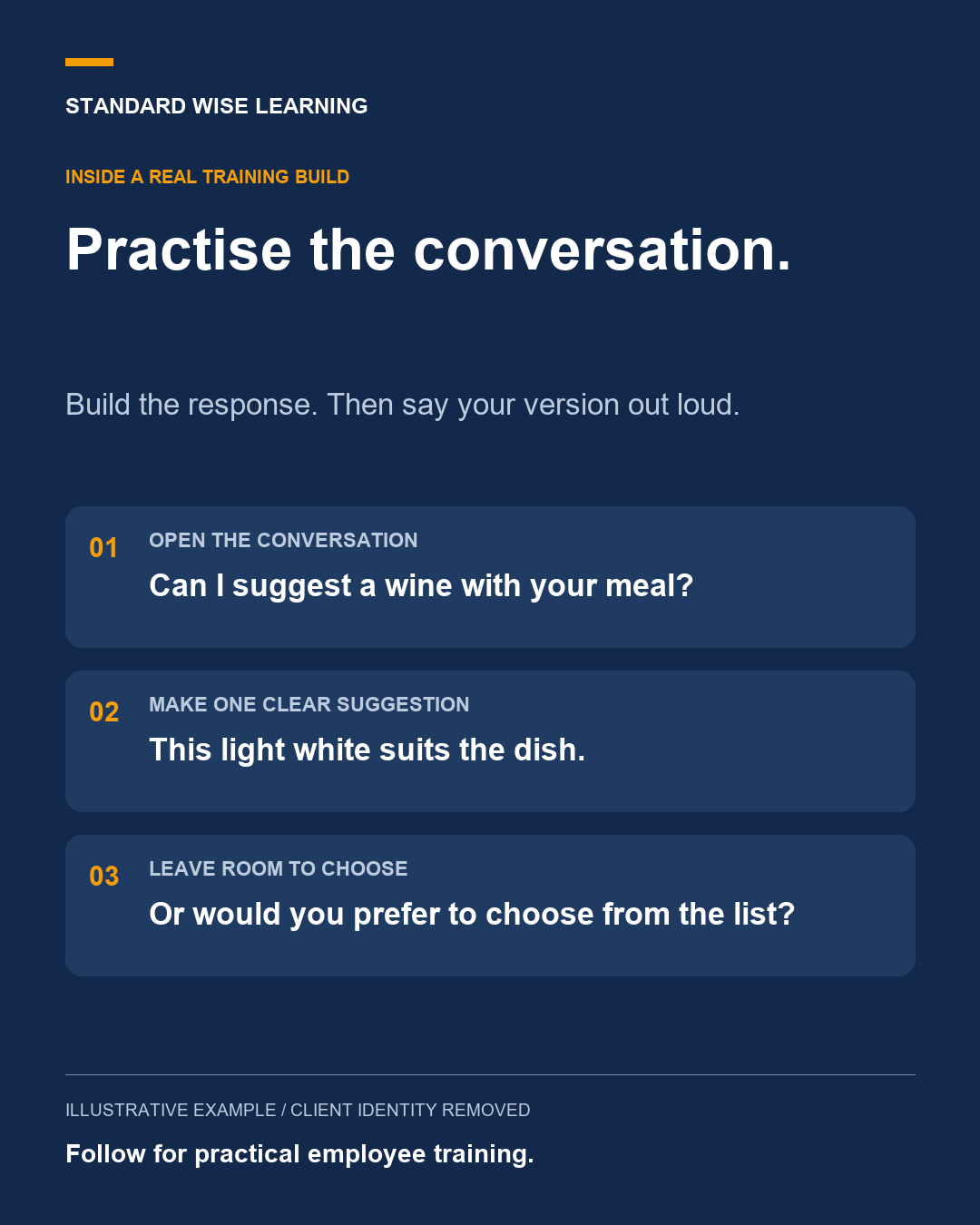
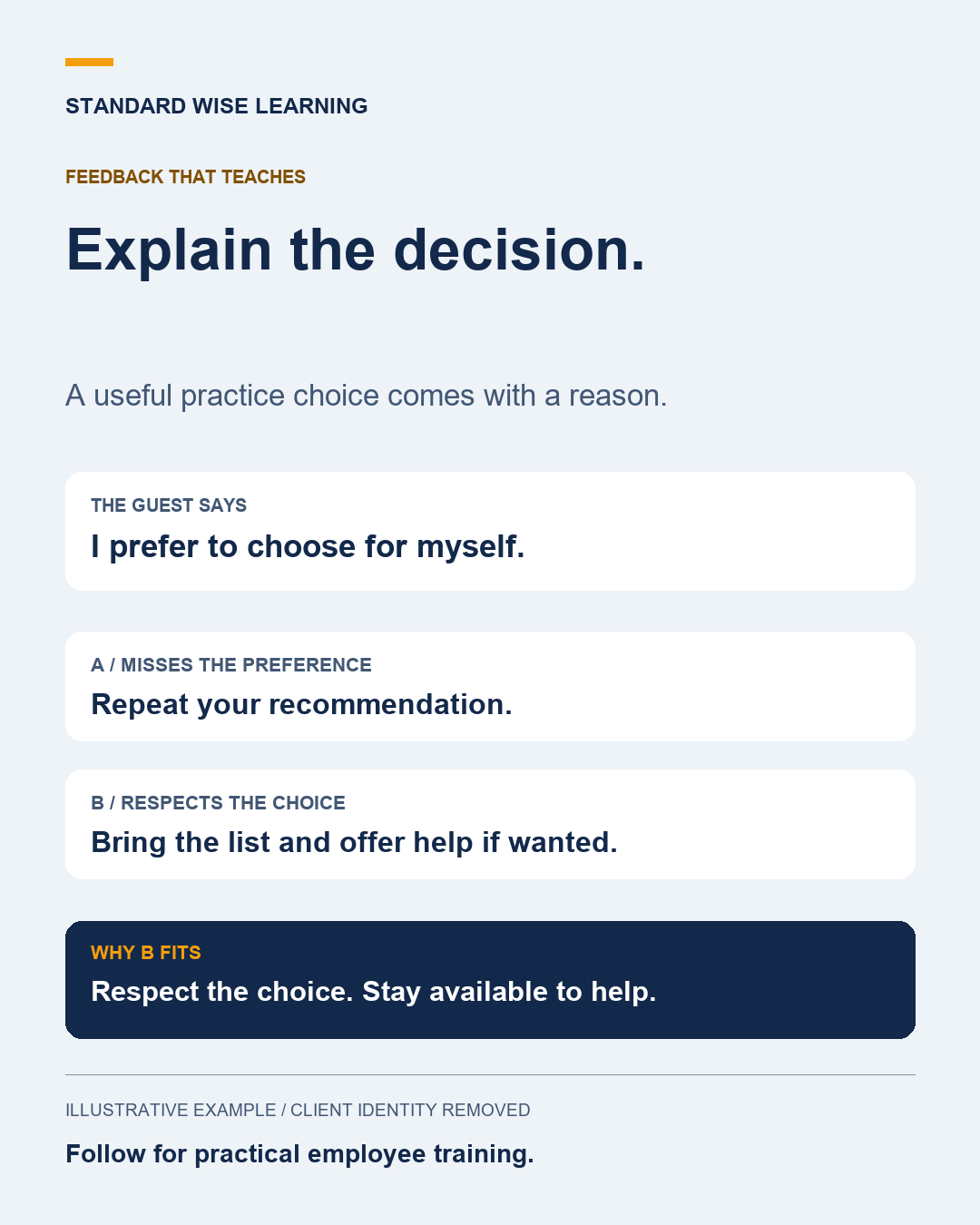
Watch a learner build a response, make a choice and get feedback they can use in a real conversation.
Illustrative recreation of a training project with the client identity removed.
Customer story
Six short lessons helped a restaurant team speak more comfortably with guests about wine, according to its owner.
“Honestly, I'd nearly given up on wine. My team was nervous about it, so it never got offered and the list just sat there. Six short lessons later and they're talking to guests about wine like it's the easiest thing in the world. No scripts, no showing off, just their own words. Standard Wise Learning got this so right, and I'm grateful.”
The Performance Pilot
Focus on one operating behavior, one group of learners and one agreed way to measure progress. Use the evidence to decide where to invest next.
Discuss a Performance PilotValidate your source, identify the gap, and agree what to observe before and after.
Review focused learning, realistic practice and a manager coaching tool with your subject matter expert.
See how the team applies the standard and decide whether to expand.
Still defining the gap? A paid Performance Readiness Review can help scope the work.
Meet the founder
I started Standard Wise Learning around a problem I knew from operations: the same written standard can play out differently by location, manager or shift. I bring frontline operations, retail enablement and instructional design together to build practice around the work itself.
Before we talk
We focus on one standard or behavior, establish the approved source and measurement approach, build the learning and practice, test with an agreed audience, and review the evidence before recommending expansion.
Inconsistent onboarding, service standards, guest recovery, operating procedures, manager coaching, frontline decisions, new process or system rollouts, and recurring execution errors.
No. We design around your existing learning and operating systems. We agree the delivery format and validate it in your target environment before rollout.
Approved source material, a responsible subject-matter expert, the audience, and a clear view of the behavior you want to improve. Your team approves policy and content before release.
Typically 3–5 weeks, depending on scope, source readiness, review speed, and the agreed measurement window. We confirm the schedule in the proposal.
We request confidential material only when it is needed for a qualified engagement. Before transfer, we agree the project’s access and handling requirements with you. Please do not send confidential documents before that agreement.
Start with a free fit call. We then recommend a scoped Performance Pilot or a paid Performance Readiness Review. Your proposal sets out the deliverables, timeline, review rounds, and price before work begins.
The proposal and agreement define ownership and permitted use of client materials, final deliverables, and reusable tools before work begins.
Then we should not build training. We first consider whether the gap is knowledge, practice, process design, job-aid access, system design, management, or something else.
Yes, where it improves speed, practice, production, or analysis. AI supports the work. It does not replace source verification, instructional judgment, client approval, quality assurance, or measurement.
Let’s talk about your team
Bring one standard or recurring problem. In 20 minutes, we’ll talk through what’s getting in the way and whether a focused pilot makes sense.
Free Google Meet call. No confidential documents needed.